
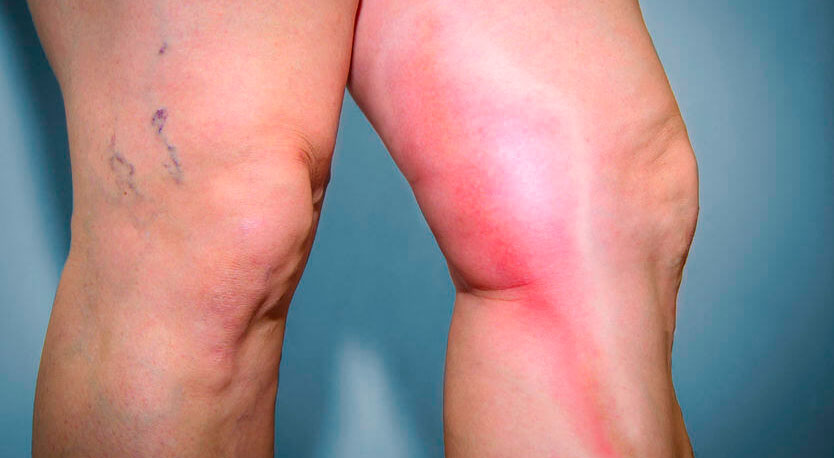
Thrombophlebitis, an inflammatory disease of the veins, is characterized by the formation of a thrombus inside the vein and is considered a serious complication of varicose veins of the legs. In this condition, the vein wall becomes inflamed and a thrombus (blood clot) forms in the lumen of the vein.
Symptoms:
difficulty moving
sharp pain along the vein containing the clot
redness and hardening of the skin on the affected leg
raised body temperature (low-grade fever up to 37.5–38 °C)
Causes:
injuries
obesity
hereditary factors
hormonal imbalance
infectious diseases
dehydration
slowed blood flow
atherosclerosis of the leg vessels
intravenous medications
varicose veins of the legs
If left untreated, a serious complication of varicose veins and thrombophlebitis develops – a trophic ulcer.
Thrombophlebitis that is not treated in time or treated improperly can lead to thromboembolism. Thromboembolism is a very serious condition. A clot inside a vein can travel with the bloodstream and lodge in other vessels and internal organs. When a clot reaches the pulmonary arteries, it blocks the artery (this is called "thromboembolism"), resulting in severe circulatory and respiratory failure and possibly the death of the patient.
Thrombophlebitis can be treated conservatively (with medication) or surgically. In severe cases, surgical treatment is used.
Information on this site is general and does not replace an examination by a doctor.