
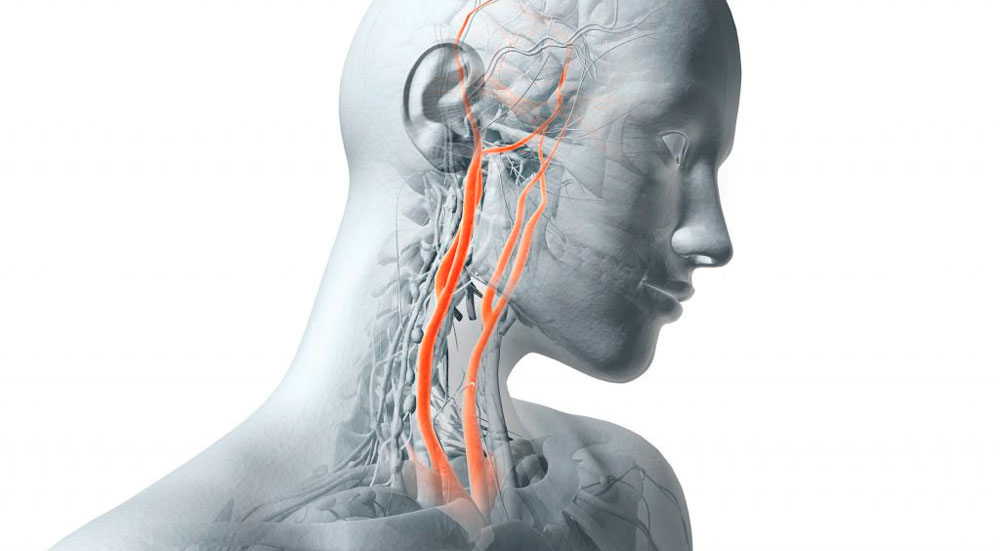
Carotid artery blockage, which can also be called narrowing (stenosis), is caused by hardening or calcification of the arteries. It is most common in people over 50 and in those with diabetes, high blood pressure or who smoke.
The carotid artery is the artery located on both sides of the neck that carries blood to the brain. The most important cause of blockage or narrowing of the carotid artery, which carries most of the blood the brain needs, is atherosclerosis.
If blood flow in the carotid artery drops to a critical level, the brain may not receive enough nourishment, which can ultimately lead to a stroke.
Also, when the artery narrows, a clot can travel to the brain, causing the following symptoms:
Stroke affecting the arms and legs
Brief episodes of blacked-out vision
Numbness, tingling or weakness in the face or arm
Speech disturbance, difficulty hearing or understanding speech
Persistent dizziness before a clot travels to the brain
If the carotid artery narrowing exceeds 50%, the artery must be opened. Treatment consists of opening the narrowing surgically or by placing a stent. In milder cases, the problem can be managed with medication.
Information on this site is general and does not replace an examination by a doctor.