
In short
Myocardial infarction is ischemic necrosis (death) of the heart muscle that develops as a result of acute coronary insufficiency. It usually occurs when coronary blood flow is completely blocked or sharply reduced due to thrombosis of the coronary arteries. The first typical sign is sudden, severe…
Myocardial infarction is ischemic necrosis (death) of the heart muscle that develops as a result of acute coronary insufficiency. It usually occurs when coronary blood flow is completely blocked or sharply reduced due to thrombosis of the coronary arteries.
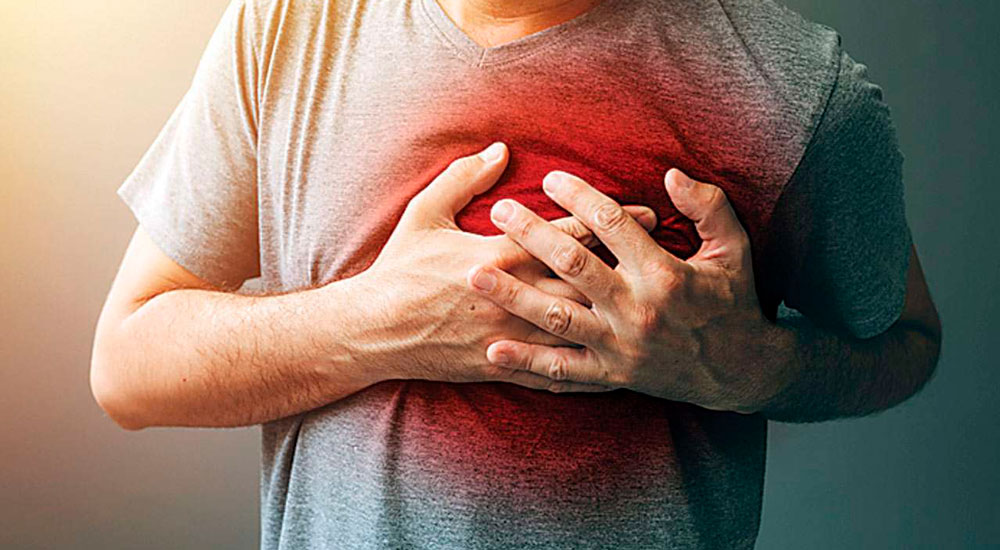
The first typical sign is sudden, severe pain behind the breastbone (in the middle of the chest). The pain may also spread to the left arm, shoulder, back, lower jaw, neck and the area between the shoulder blades. In other cases, a heart attack may cause not pain but chest discomfort – a sensation of intense squeezing, pressure or heaviness. The pain may sometimes be accompanied by nausea, vomiting, cold sweat, anxiety, fear of death, irregular heartbeat, difficulty breathing and loss of consciousness. However, in some cases a person can have a heart attack without noticing any symptoms at all.
Causes
- Coronary artery embolism
- Coronary artery atherosclerosis
- Congenital defects of the coronary arteries
- Damage to the coronary arteries from other causes
Risk factors
- obesity
- high blood pressure
- diabetes mellitus
- neuropsychological stress
- alcohol and tobacco use
Diagnosis of myocardial infarction
- Blood tests
- ECG and exercise stress ECG
- Echocardiography
- Coronary angiography
Myocardial infarction (heart attack) is damage to part of the heart muscle that occurs when a coronary artery supplying that area is suddenly blocked and the area is left without oxygen. The main symptom is a squeezing, pressing pain in the chest; if it lasts more than 5 minutes, call 103 (the ambulance number in Azerbaijan) immediately. Every minute lost means loss of heart muscle.
What is a myocardial infarction?
The heart is a muscle that works without stopping and receives its oxygen through the coronary arteries. Cholesterol plaque builds up in the walls of these arteries (atherosclerosis). When a plaque ruptures, a blood clot forms on it and can block the artery completely. In the area where blood flow is cut off, cells begin to die. The World Health Organization lists cardiovascular diseases among the leading causes of death worldwide (WHO: Cardiovascular diseases).
Heart attacks are divided into two main types: those with ST-segment elevation on the ECG (complete blockage of the artery, the most urgent case) and those without ST-segment elevation. Both require emergency hospital treatment.
Heart attack symptoms: typical and atypical forms
Typical symptoms
- A squeezing, heavy, burning pain or feeling of pressure in the middle of the chest;
- Pain spreading to the left arm, shoulder, neck, jaw or back;
- Shortness of breath, cold sweat;
- Nausea, vomiting, dizziness;
- A fear of dying or a strong feeling of anxiety.
Atypical symptoms in women and people with diabetes
In women, older people and people with diabetes, a heart attack may have subtle symptoms. There may be no severe pain; instead, shortness of breath, unusual tiredness, discomfort in the epigastric region (the upper abdomen), nausea or back pain may be the main features. In diabetes, because nerve fibres are damaged, pain may not be felt at all. In such cases, if you are in doubt, do not wait. Information on the different ways symptoms can appear is also available on the NHS heart attack page.
| Feature | Angina | Myocardial infarction |
|---|---|---|
| Duration of pain | Short, usually linked to exertion | Long, continues even at rest |
| Rest or medication under the tongue | Often relieves it | Not enough |
| Heart muscle | No permanent damage | Damage occurs |
| Action | Medical examination | Call 103 immediately |
What to do during a heart attack
Immediate steps
- Call 103. Do not drive yourself, and do not wait thinking “it will pass”. The ambulance crew can begin first treatment and an ECG on the way.
- Sit comfortably or in a half-sitting position, do not move about, and loosen tight clothing.
- If your doctor has previously prescribed a nitrate to take under the tongue, use it as instructed.
- Follow the 103 operator's instructions regarding aspirin. If you have an allergy or a risk of bleeding, do not decide on your own.
- If the person has lost consciousness and is not breathing, start chest compressions following the dispatcher's instructions.
What not to do
- Wait with the symptoms until the evening or the morning;
- Drive yourself to hospital;
- Waste time with random painkillers or home remedies;
- Lift heavy objects, walk around or do physical activity.
Diagnosis in hospital
In hospital, the diagnosis is made with several rapid tests:
- ECG: shows the electrical activity of the heart muscle and determines the treatment strategy;
- Troponin test: a protein that rises in the blood when the heart muscle is damaged; it helps confirm a heart attack;
- Echocardiography: assesses the pumping function of the heart;
- Coronary angiography: uses contrast dye to show which artery is blocked and to what extent, and is often performed at the same time as treatment.
Treatment of myocardial infarction
The main aim is to open the blocked artery as quickly as possible and protect the heart muscle. The treatment method is chosen by the doctor according to the type of heart attack, the extent of artery damage and the patient's condition.
Emergency angioplasty and stent
A catheter inserted through the groin or wrist is used to reach the blocked artery, which is opened with a balloon and, if necessary, a stent is placed to keep the artery open. In most cases this is the first-choice method. For international recommendations, see the guidelines of the European Society of Cardiology (ESC).
Coronary bypass
If several arteries are extensively damaged or are not suitable for a stent, coronary artery bypass grafting may be planned. This creates a new route for blood that bypasses the blocked area. The decision is made through a joint assessment by a cardiologist and a cardiovascular surgeon.
Medication
- Medicines that reduce platelet stickiness (antiplatelet agents);
- Medicines that prevent the blood clot from growing;
- Beta-blockers and medicines that reduce the workload of the heart;
- Statins to lower cholesterol;
- Blood pressure and heart failure medicines if needed.
The dose and duration of medication are set individually; stopping them on your own is dangerous.
Risk factors and prevention
The main factors that increase the risk of a heart attack are: smoking, high blood pressure, high cholesterol, diabetes, excess weight, a sedentary lifestyle, stress and a family history of early heart disease. Some of these can be changed.
- Stop smoking completely;
- Have your blood pressure, cholesterol and blood sugar checked regularly;
- Limit salt and saturated fats, and eat vegetables, fruit and whole grains;
- With your doctor's approval, take regular walks or do moderate-intensity physical activity;
- If you have chest discomfort during exertion, see a cardiovascular doctor without delay.
You can also find general recommendations for cardiovascular health on the American Heart Association (AHA) website.
Life and rehabilitation after a heart attack
A heart attack is not the end of life, but it is the beginning of a new stage. Cardiac rehabilitation usually begins in hospital and continues at home.
- Physical activity: exertion is increased step by step under medical supervision, starting with light walks.
- Taking medication as prescribed: prescribed medicines are taken without interruption; if there are side effects, talk to your doctor.
- Diet and weight: limiting salt and fat, a balanced diet.
- Psychological support: fear, anxiety and depression are very common after a heart attack, and it is important to share this with your doctor.
- Follow-up tests: ECG, echocardiography, blood tests and, if needed, a stress test are repeated as planned.
Information on this site is general and does not replace an examination by a doctor.