
In short
The main cause of cardiovascular disease is atherosclerosis, or hardening of the arteries! In atherosclerosis, a widespread chronic condition today, the artery wall thickens and loses its elasticity, fatty substances (mainly cholesterol) accumulate in the inner layer of the arteries, the vessel…
The main cause of cardiovascular disease is atherosclerosis, or hardening of the arteries!
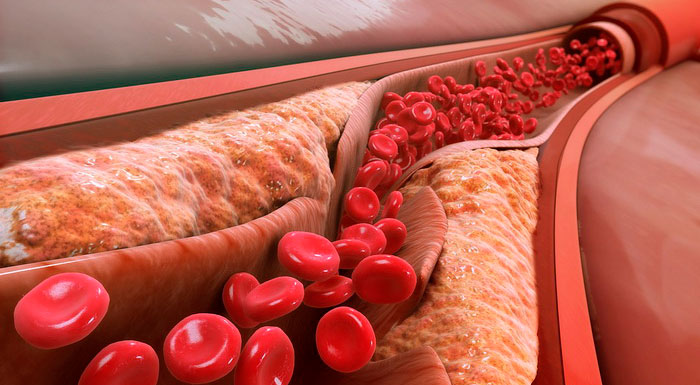
In atherosclerosis, a widespread chronic condition today, the artery wall thickens and loses its elasticity, fatty substances (mainly cholesterol) accumulate in the inner layer of the arteries, the vessel begins to narrow, and as a result the blood supply to the heart, brain or other organs deteriorates. In short, blood circulation in the body is impaired.
Atherosclerosis can underlie coronary heart disease, ischemic stroke, obliterative disease of the leg arteries, chronic mesenteric artery occlusion and other conditions.
Risk factors for atherosclerosis:
- smoking
- diabetes mellitus
- unhealthy diet
- heavy alcohol consumption
- chronic psycho-emotional stress
- hyperlipidemia (abnormally high blood lipid levels)
Atherosclerosis is the narrowing and hardening of the arteries caused by plaques of cholesterol, fat, calcium and cell debris building up on the inner wall of the vessel. The process develops silently over many years and can later reduce blood flow in the arteries of the heart, brain and legs, leading to serious complications such as a heart attack or stroke. Early detection is the cornerstone of treatment.
What is atherosclerosis?
Arteries carry blood from the heart to the organs. A healthy artery wall is smooth and elastic. In atherosclerosis the inner layer of the wall is damaged, a fatty plaque forms there and grows over time. The plaque can restrict blood flow, and it can also rupture so that a clot forms on top of it. The American Heart Association (AHA) describes this disease as one of the main mechanisms behind cardiovascular disease: the AHA page on atherosclerosis.
A brief distinction: "atherosclerosis" is the form in which plaque specifically builds up in the artery wall, while "arteriosclerosis" is a broader term for thickening and loss of elasticity of the artery wall for any reason. In practice the two names are often used interchangeably.
How does atherosclerosis develop?
Damage to the artery wall is where the process begins. After this damage, "bad" cholesterol passes into the artery wall, immune cells gather there and the plaque slowly grows. Specific risk factors are covered in a separate section, so they are not repeated here.
The process unfolds in stages:
- Damage to the inner layer of the artery wall.
- Build-up of fatty substances in the wall.
- Growth of the plaque and hardening as calcium is deposited.
- Narrowing that reduces blood flow, or rupture of the plaque.
In practical terms, what matters more than the size of the plaque is whether it is stable or vulnerable. When a vulnerable plaque ruptures, the artery can suddenly become blocked; this is the main mechanism behind heart attacks and strokes.
What are the symptoms of atherosclerosis?
The symptoms depend on which artery the plaque is in. Mayo Clinic notes that there are often no symptoms at all until an artery is severely narrowed or blocked: Mayo Clinic source.
In the heart arteries
- A squeezing pain or feeling of heaviness in the chest during physical exertion.
- Shortness of breath and tiring quickly.
- Being aware of your heartbeat (palpitations).
In the arteries of the brain and neck
- Dizziness, brief disturbances of vision.
- Slurred speech, temporary weakness on one side of the body.
In the leg arteries
- Calf pain when walking that eases after rest.
- Cold feet, changes in skin colour, wounds that are slow to heal.
Which tests are carried out?
The doctor first assesses your symptoms, family history and the medicines you take, and measures your pulse and blood pressure. Tests are then ordered according to your situation:
- Blood tests: lipid profile, glucose, kidney function.
- ECG and stress test: the heart's electrical activity and its response to exertion.
- Echocardiography: the structure of the heart and its pumping function.
- Ultrasound of the arteries (Doppler): assessment of blood flow in the neck and leg arteries.
- CT scan or angiography: precise imaging of where the narrowing is and how severe it is.
Only a doctor can decide which test is needed. The international approach to controlling blood lipids can also be followed in the NICE guideline: NICE NG238. For an individual assessment, it is advisable to consult a cardiovascular surgeon.
Treatment options compared
The aim of treatment is to slow the growth of plaque, relieve symptoms and prevent complications. The UK National Health Service (NHS) presents lifestyle changes and medicines as the main approach in cardiovascular disease: NHS source. When the narrowing is severe, a procedure or operation is considered.
| Method | When it is considered | What it involves | Key feature |
|---|---|---|---|
| Lifestyle changes | In all patients | Stopping smoking, diet, physical activity, weight control | Supports the effect of the other methods |
| Medicines | In most patients | Medicines that lower cholesterol, control blood pressure and reduce clot formation | Require long-term, uninterrupted use |
| Stent (balloon angioplasty) | In selected, limited narrowings | The narrowed section is widened with a balloon and a stent is placed | A minimally invasive procedure that does not need a large incision |
| Bypass surgery | In multiple or complex narrowings | A new route for blood is created that bypasses the blocked section | A surgical operation; the decision is made by the heart team |
| Endarterectomy | In severe narrowing of the neck (carotid) artery | The plaque is surgically removed from the artery | Aims to reduce the risk of stroke |
The choice depends on where the narrowings are, how many there are, the patient's age and any other conditions. The same method is not suitable for every patient, and no result can be guaranteed. The European Society of Cardiology (ESC) guidelines also stress that choosing a treatment is an individual, multidisciplinary decision: ESC guidelines.
Possible risks and complications
Untreated atherosclerosis can lead to the following conditions:
- Myocardial infarction (heart attack) and unstable angina.
- Stroke or transient ischaemic attack (mini-stroke).
- Severe lack of blood supply in the leg arteries, wounds that do not heal.
- Damage to the kidney arteries.
It is important to know that the procedures themselves also carry risks: bleeding, infection, re-narrowing of the artery and reactions to anaesthesia are possible. These risks vary with the patient's condition and should be discussed in detail with the doctor before any procedure.
Follow-up and recovery after treatment
After treatment, the recovery period and long-term follow-up are important for a lasting result.
- Do not stop the medicines your doctor has prescribed on your own.
- Stop smoking completely.
- Limit salt, saturated fats and processed foods; choose a diet rich in vegetables, fruit, wholegrains and fish.
- With your doctor's approval, start physical activity gradually and take part in a cardiac rehabilitation programme.
- Check your blood pressure, blood sugar and cholesterol levels regularly.
- Attend your follow-up appointments on the scheduled dates.
Keeping a pain diary is also useful: noting at what level of exertion the symptom appears and how many minutes it lasts helps the doctor assess how your condition is changing.
Questions to ask your doctor
- How severe is the narrowing in my arteries, and which test do I need?
- Are medicines alone enough, or is a procedure planned?
- What are the benefits and risks of the proposed method?
- Which medicines should I take, and for how long?
- What restrictions apply in daily life, and what level of physical exertion is suitable?
- When should my next follow-up appointment be?
When should you call an ambulance?
In the following situations do not wait; call 103 (the ambulance number in Azerbaijan) immediately:
- Severe chest pain, tightness or a feeling of pressure lasting more than 5 minutes, spreading to the back, jaw or arm.
- Sudden shortness of breath, cold sweat, nausea, loss of consciousness.
- Drooping of one side of the face, weakness in an arm, difficulty speaking.
- Sudden pain, coldness, paleness or loss of feeling in a leg.
In such situations do not drive yourself and do not wait for the pain to pass. Even if the symptoms go away, you still need to see a doctor.
Information on this site is general and does not replace an examination by a doctor.