

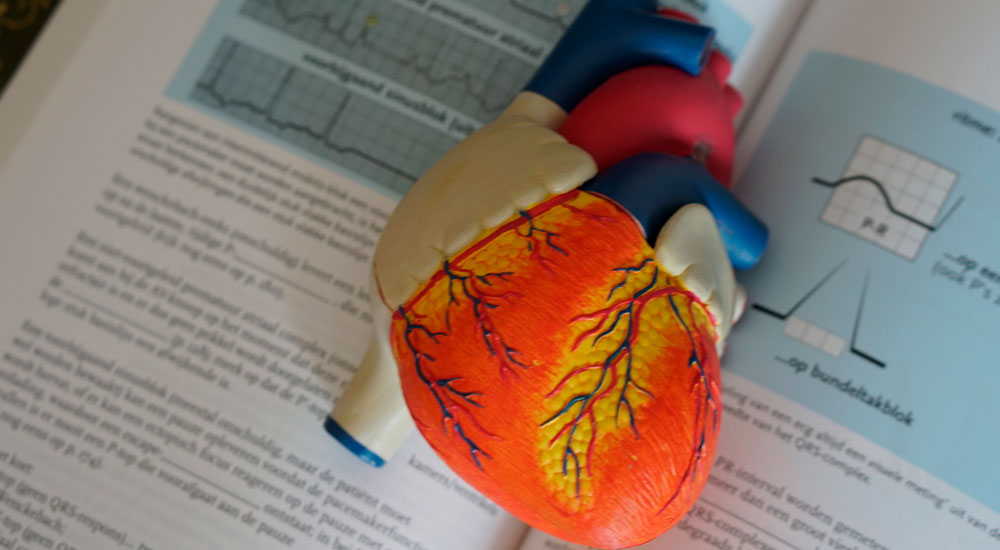
In short
If you have been diagnosed with heart failure, don't panic and think "my heart is going to stop any minute"! Heart failure means that your heart is not working as well as it should. In a normal, healthy heart, a certain amount of blood enters the heart with each heartbeat and is then pumped out. In…
If you have been diagnosed with heart failure, don't panic and think "my heart is going to stop any minute"! Heart failure means that your heart is not working as well as it should.
In a normal, healthy heart, a certain amount of blood enters the heart with each heartbeat and is then pumped out. In heart failure, your heart cannot pump out the full amount of blood that has entered it with each beat.
Types of heart failure:
- Diastolic heart failure — characterized by the heart chambers not filling properly with blood in the intervals between heartbeats.
- Systolic heart failure — this means that the ventricles do not contract adequately with each heartbeat, so the blood that has entered the heart is not fully pumped out.
Heart failure is not a separate disease; it develops as a complication of various cardiovascular conditions such as coronary heart disease, myocardial infarction, heart valve defects, cardiomyopathies, arterial hypertension, etc.
Symptoms:
- Weakness
- Constipation
- Fatigue
- Loss of appetite
- Shortness of breath
- Dizziness
- Chest pain
- Heart rhythm disturbances
- Swelling of the ankles and feet
- Cyanosis (bluish discoloration) of the nails and the area around the nose and lips
In acute and chronic heart failure, bed rest, complete mental and physical rest, and an easily digestible diet rich in vitamins are prescribed.
In cases of heart defects acting as a mechanical barrier, cardiac aneurysm or constrictive pericarditis, surgery is performed in most cases.
Heart failure is a condition in which the heart muscle cannot pump as much blood as the body needs. It does not mean that the heart has stopped: the heart is working, but its strength or its ability to fill is reduced. As a result, the organs do not get enough blood and oxygen, and fluid building up in the tissues leads to shortness of breath and swelling. The condition is treated according to its cause and requires regular follow-up.
What is heart failure?
Heart failure is less a stand-alone diagnosis than the common end result of various heart diseases. The left ventricle sends blood to the whole body; when its pumping strength weakens, or when the ventricle stiffens and does not fill enough, the circulation is disturbed. The disease is divided into chronic (developing slowly over a long time) and acute (worsening over a short time) forms. In the chronic form the body compensates for a long time, so symptoms are noticed gradually and often late. In the acute form, shortness of breath and swelling can get worse within a few hours or days. Below, the causes, tests, treatment and day-to-day monitoring are explained. For other topics related to the cardiovascular system, you can visit the cardiovascular surgeon page.
Main causes of heart failure
Heart failure often develops on the background of another disease:
- Ischaemic heart disease: narrowing of the coronary arteries or a previous heart attack damages part of the heart muscle.
- Arterial hypertension: years of uncontrolled high blood pressure put strain on the heart and thicken its wall.
- Heart valve disease: narrowing or leakage makes the heart's work harder.
- Cardiomyopathies: diseases of the heart muscle itself (inherited, infectious or toxic in origin).
- Rhythm disorders: a fast or irregular heartbeat that continues for a long time tires the muscle.
- Other factors: diabetes, obesity, excessive alcohol intake, kidney and thyroid disease.
The American Heart Association (AHA) and Mayo Clinic list high blood pressure and coronary artery disease among the main risk factors. Sources: the AHA heart failure section, Mayo Clinic page. The European Society of Cardiology (ESC) guidelines can be found on the ESC website.
Identifying the cause correctly changes the direction of treatment: revascularisation is considered for a patient with narrowed arteries, valve surgery for one with a severe valve defect, and a rhythm-control approach for one with a rhythm disorder. This is why it is important to find not only the symptom but the underlying cause.
Signs that the condition is getting worse
The main symptoms are given in the symptoms section of the page. Listed here are signs worth watching at home that point to worsening:
- a sudden gain in weight over a few days (this may be due to fluid build-up);
- worsening shortness of breath with exertion that used to cause no difficulty;
- waking at night because you are short of breath, or needing several pillows to sleep;
- increasing swelling at the ankles, shoes becoming tight;
- a dry cough that gets worse when lying down;
- loss of appetite and a feeling of fullness in the abdomen.
For example, if a patient used to climb to the third floor without stopping but now has to stop on the first floor, and their legs swell in the evenings, this is a reason to see a cardiologist without waiting for a planned check-up.
Which tests are carried out?
The diagnosis is made on the basis of listening to the symptoms, a physical examination and instrumental tests:
- ECG: shows rhythm disorders and signs of a previous heart attack.
- Echocardiography (ultrasound of the heart): assesses the ejection fraction, the condition of the valves and the size of the chambers; it is one of the most important tests in choosing treatment.
- Blood tests: natriuretic peptides (BNP / NT-proBNP), kidney function, electrolytes, glucose, anaemia and thyroid hormones.
- Chest X-ray: shows the size of the heart and whether there is fluid in the lungs.
- Coronary angiography: performed if narrowed arteries are suspected as the cause.
- Cardiac MRI: ordered when the nature of the muscle damage needs to be clarified.
The doctor decides the scope of testing according to the patient's age, other conditions and initial results. The ejection fraction shows the share of blood the ventricle pushes out with each contraction and is regarded as one of the key measures for the treatment plan.
Treatment and surgical options
The aim of treatment is to relieve symptoms, lower the likelihood of hospital admission and, where possible, remove the underlying cause. According to the NHS, treatment mainly consists of medicines, lifestyle changes and, in some cases, a device or surgery; for more detail see the NHS heart failure page.
Comparison table
| Method | When it is considered | Aim | Key points |
|---|---|---|---|
| Medicines | The main treatment in most patients | To relieve symptoms and reduce the strain on the heart | Doses are adjusted by the doctor; they must not be stopped on your own |
| Lifestyle changes | At every stage | To reduce fluid build-up and strain | Salt restriction, weight control, stopping smoking |
| Coronary revascularisation (stent or bypass) | If the cause is narrowing of the heart arteries | To improve the blood supply to the heart muscle | The choice is guided by the angiography results and overall condition |
| Valve surgery | If the main cause is a severe valve defect | To correct the valve problem | The valve can be repaired or replaced with a prosthesis |
| Implantable devices | When certain rhythm and ejection fraction criteria are met | To regulate the rhythm and protect against dangerous rhythm disorders | The indication is assessed according to international guidelines |
| Advanced options (mechanical support, transplantation) | When other methods are not enough, in a specialised centre | To maintain quality of life in the severe stage | Requires a multidisciplinary team decision |
Surgical treatment is not intended for everyone. The decision is made after a joint assessment by a cardiologist and a cardiac surgeon. The decision to operate takes into account the patient's age, the overall condition of the heart, other conditions and the response to medicines.
Risks of heart failure
Heart failure that is left uncontrolled can lead to a number of complications:
- repeated acute deteriorations and hospital admissions;
- worsening of kidney and liver function;
- dangerous rhythm disorders and a risk of sudden cardiac death;
- development or worsening of valve leakage;
- fluid build-up in the lungs (pulmonary oedema);
- reduced daily activity and quality of life.
How serious the risks are depends on the cause and stage of the disease and on adherence to treatment. This is why regular appointments and taking medicines without interruption are important.
Recovery and day-to-day monitoring
For the patient, the most important part is monitoring at home:
- Weigh yourself every morning: after using the toilet, before breakfast, on the same scales. A gain over a short period should be reported to the doctor.
- Salt and fluid regime: the amount is set by the doctor; you need to take into account the hidden salt in ready meals and tinned foods.
- Measuring blood pressure and pulse: the results are written in a diary and brought to appointments.
- Taking medicines regularly: do not change the dose or stop on your own.
- Physical activity: with your doctor's approval, daily walks and light exercise; avoid heavy exertion.
- Giving up harmful habits: smoking and alcohol cause additional harm to the heart muscle.
- Vaccinations: it is a good idea to talk to your doctor about flu and pneumococcal vaccines.
During recovery after surgery, an individual plan from the doctor is followed, including a rehabilitation programme.
Questions to ask your doctor
Preparing for your appointment helps treatment go more effectively:
- What is the cause of my heart failure, and can it be removed?
- What is my ejection fraction on echocardiography, and what does it show?
- Which medicines am I taking and why, and what are their side effects?
- How much salt and fluid should I have per day?
- What physical exertion is allowed, and what should I avoid?
- Is surgical or device treatment being considered for me?
- When should I have my next check-up, and with which signs should I seek help sooner?
When should you call 103?
In the following situations an ambulance (103, the ambulance number in Azerbaijan) should be called without delay:
- severe shortness of breath at rest or a feeling of suffocation;
- a cough with frothy, pink-coloured sputum;
- chest pain that is severe or lasts more than 5 minutes;
- loss of consciousness, sudden blacking out of vision or confusion;
- a very fast, irregular heartbeat together with weakness;
- bluish lips or fingers.
Information on this site is general and does not replace an examination by a doctor.