

In short
Aneurysms (dilations) in the abdominal part of the aorta are called "abdominal aneurysms.". When an abdominal aortic aneurysm (AAA) ruptures, symptoms include sudden, severe pain in the lower abdomen or back, nausea and vomiting, sweating, dizziness, and a rapid heart rate on standing up. The risk…
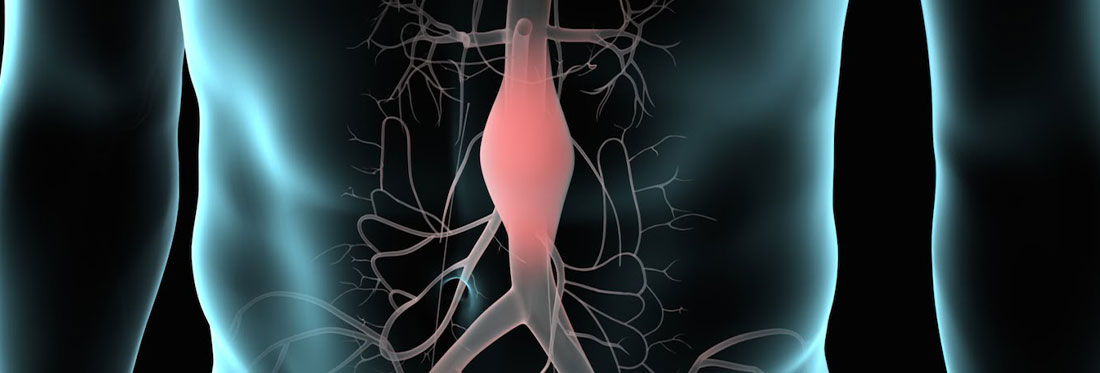
Aneurysms (dilations) in the abdominal part of the aorta are called "abdominal aneurysms."
When an abdominal aortic aneurysm (AAA) ruptures, symptoms include sudden, severe pain in the lower abdomen or back, nausea and vomiting, sweating, dizziness, and a rapid heart rate on standing up.
The risk of AAA increases with age, and it is most common in people aged 60 to 80.
Internal bleeding caused by a ruptured AAA can send the patient into shock. Rupture of an abdominal aortic aneurysm is a fatal complication.
Repairing the aorta surgically or with the endovascular method (EVAR) makes it possible to achieve better outcomes.
An abdominal aortic aneurysm (AAA) is a weakening and widening of the wall of the aorta where it passes through the abdomen. It often causes no complaints and is found by chance; the main danger is rupture of the aneurysm, that is, severe internal bleeding. That is why, in people in risk groups, an ultrasound scan, monitoring according to size and, when necessary, EVAR or open surgery play a decisive role.
Why is an abdominal aortic aneurysm (AAA) dangerous?
The aorta is the largest artery in the body and carries blood under high pressure with every heartbeat. When the wall weakens, this pressure gradually widens it. As it widens, the wall becomes thinner, and this increases the likelihood of rupture. Because an aneurysm causes no pain in its early stage, the patient may feel completely healthy. For this reason, the diagnosis is often based not on the patient's complaints but on imaging results. General information about widening in other parts of the aorta can be found on the aortic aneurysm page.
The main causes and risk factors of AAA
There is no single cause; usually several factors combine. According to Mayo Clinic and the NHS, the main risk factors are:
- Smoking: one of the factors with the strongest effect on the aortic wall.
- Age and sex: the risk increases with age and it is more common in men.
- High blood pressure: creates a constant load on the wall.
- Atherosclerosis: plaques in the vessel wall weaken its strength.
- Family history: having a close relative with AAA raises the risk.
It should be noted that having these factors does not mean an aneurysm will definitely develop; it simply shows that screening is more important.
Symptoms: when to be suspicious
Before rupture, there are often no symptoms. Some patients may have the following:
- a persistent pulsating sensation in the abdomen, around the navel;
- persistent dull pain in the side of the abdomen or the lower back;
These complaints also have many other causes, so it is not right to draw conclusions on your own. If they persist, see a doctor. You can also read a general explanation of aneurysm symptoms in the article symptoms of aneurysms.
Tests: how is AAA detected?
Diagnosis is carried out in several steps:
- Abdominal ultrasound: painless, quick and accessible; it is the first choice for measuring the diameter of the aorta.
- Computed tomography (with angiography): shows the exact size and length of the aneurysm and its relationship to the kidney arteries. The surgical plan is built on this result.
- MR angiography: used as an alternative in some cases.
In the United Kingdom, the NHS offers ultrasound screening to men aged 65. In Azerbaijan, the timing of screening for people in risk groups is determined individually by the doctor. For more information about examination methods, you can see the non-invasive and invasive diagnostics section.
Treatment options
The choice depends on the size of the aneurysm, its rate of growth, the complaints and the patient's general condition. The NICE NG156 guideline also emphasises that the decision should be based on weighing up risks and benefits.
1. Active monitoring
For small aneurysms, instead of surgery, the size is monitored with ultrasound or CT at set intervals. At the same time, blood pressure, cholesterol and smoking are brought under control.
2. When is surgery considered?
The NICE NG156 guideline usually gives a diameter of 5.5 cm or more as the threshold for intervention; for women, some guidelines consider a smaller threshold. If the aneurysm is growing quickly or causing symptoms, a decision may be made at a smaller size as well. The exact threshold is assessed individually for each patient.
3. EVAR compared with open surgery
| Criterion | EVAR (endovascular) | Open surgery |
|---|---|---|
| Access | Through the groin artery with a small incision | Opening of the abdominal cavity |
| Method | Placing a stent graft in the aorta | Replacing the widened segment with an artificial vessel (graft) |
| Recovery period | Usually shorter | Usually longer |
| Anatomical requirement | The aneurysm must be suitable for a stent graft | Possible in a wider range of anatomical situations |
| Follow-up | Regular imaging is essential | Less frequent, but planned follow-up |
Which method is chosen is determined by the CT result and the condition of the patient's heart and lungs. More about the procedure: EVAR-TEVAR.
Follow-up after surgery
Treatment does not end after the procedure; it simply moves to a new stage. In patients who have had EVAR, planned ultrasound or CT is performed to check that the stent graft has not shifted and that blood is not leaking into the aneurysm sac. After open surgery, the wound, the general condition and the function of the vascular prosthesis are monitored. At this stage, you must not stop the blood thinners and blood pressure medicines prescribed by your doctor on your own. If new abdominal pain, coldness or colour change in the legs, or fever develops, seek help without waiting for the next planned appointment.
Preparing for your appointment
When going to your appointment, bring your previous ultrasound and CT results, a list of the medicines you take and information about whether there is aortic disease in your family. Note how long you have smoked and your blood pressure readings. This information helps the doctor assess your risk individually. It is also useful to write down your questions in advance about treatment options, recovery time and subsequent follow-up.
Practical advice for daily life
- Stop smoking completely; this is one of the main modifiable factors affecting the risk of aneurysm growth.
- Measure your blood pressure at home and take the medicines prescribed by your doctor without interruption.
- Keep your cholesterol under control; reduce salt and saturated fats.
- Avoid lifting very heavy weights and hard straining; agree with your doctor on what physical load is appropriate.
- Do not miss your planned ultrasound or CT appointments.
- There are aortic warnings related to some fluoroquinolone antibiotics; if you have an aneurysm, be sure to tell your doctor about it whenever any medicine is prescribed.
Myths and facts
- Myth: "If I have no pain, the aneurysm is safe." Fact: An aneurysm can be painless, and its size can only be known through imaging.
- Myth: "Medication shrinks the aneurysm." Fact: Medication controls the risk factors; it does not reverse the widening.
- Myth: "Aneurysms only occur in old people." Fact: The risk increases with age, but smoking, blood pressure and inherited tendency also play a role in younger people.
- Myth: "The operation must be open surgery." Fact: With suitable anatomy, an endovascular method such as EVAR is possible.
When should you call 103?
In the following situations, do not wait; call 103 immediately:
- sudden severe pain in the lower abdomen or back;
- pain accompanied by sweating, nausea, vomiting, dizziness or fainting;
- a sharp increase in heart rate and weakness when standing up;
- chest pain lasting more than 5 minutes.
These signs may indicate rupture of the aneurysm (severe internal bleeding), and every minute matters. Do not try to drive yourself; wait for the ambulance.
Additional sources
For detailed and independent information, you can consult the NHS AAA page, Mayo Clinic's AAA overview and the NICE NG156 guideline. An individual decision requires a face-to-face consultation with a cardiovascular surgeon.
Information on this site is general and does not replace an examination by a doctor.