
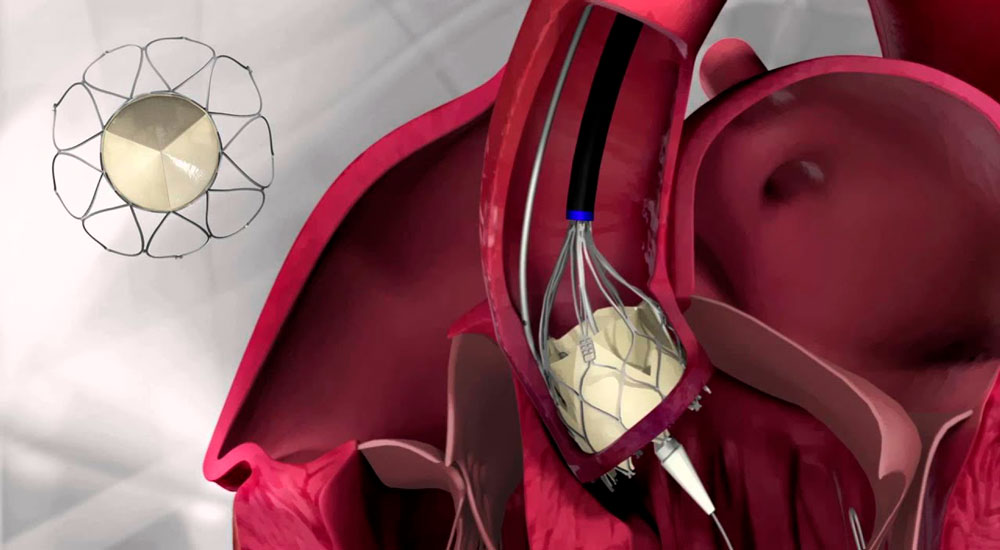
Aortic valve regurgitation (insufficiency), caused by incomplete closure of the aortic valve leaflets, is characterized by blood flowing back from the aorta into the left ventricle. It is the second most common acquired heart valve defect.
Because the disease remains asymptomatic for a long time, it shows itself only in physically active people, with signs such as pulsation in the neck and head, shortness of breath, anginal chest pain, high pulse pressure and an increased heart rate.
The diagnosis of aortic regurgitation is confirmed by medical history, physical examination, ECG, X-ray and Doppler echocardiography, and both medical and surgical treatments are used. In severe symptomatic aortic regurgitation, surgical treatment – aortic valve repair or replacement – is indicated.
Aortic stenosis may be congenital or acquired as a result of rheumatic disease. Its classic symptoms include fainting, angina, and shortness of breath on exertion. Surgical treatment options are open-heart surgery through a large incision (sternotomy) and closed (minimally invasive) aortic valve replacement or repair through the armpit (with a 3–4 cm skin incision).
Overall, the aortic and mitral valves are the most commonly affected. In such cases, valves that can no longer function are removed and replaced with an “artificial heart valve”. Heart valves are replaced with a mechanical or biological valve (prosthesis). A mechanical valve is more durable but requires lifelong use of blood-thinning medication. A biological valve has a shorter lifespan (10–15 years) but does not require blood thinners. Like bypass surgery, this operation requires open-heart surgery.
Information on this site is general and does not replace an examination by a doctor.