
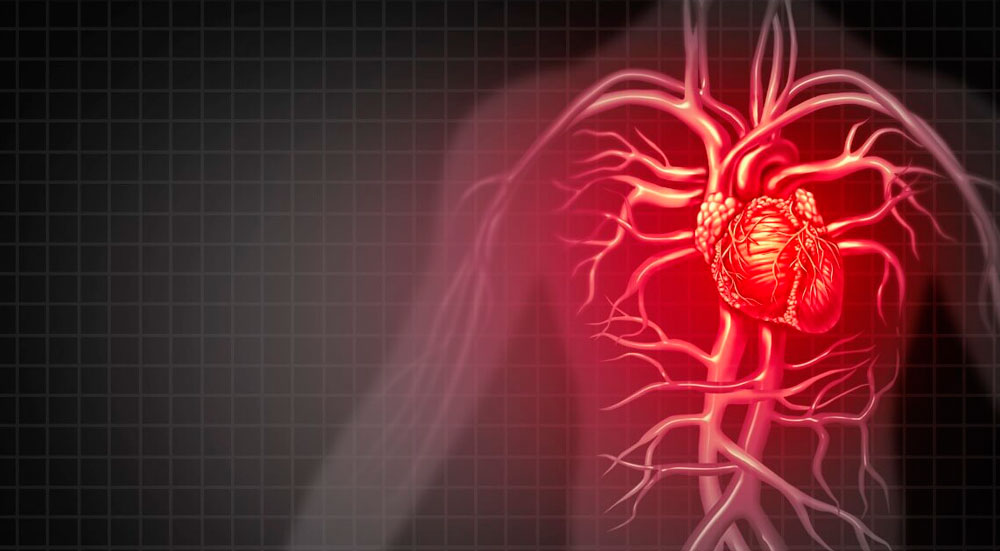
Cardiac tumors are a heterogeneous group of growths that develop from the tissues and membranes of the heart. They can originate from any cardiac tissue and can occur at any age.
Cardiac tumors that are considered an independent disease are called primary, while tumors that metastasize via the bloodstream or lymphatic system, or spread from neighboring organs, are called secondary. Primary tumors are usually benign (that is, not cancer).
Myxomas account for 50% of primary cardiac tumors. They are mostly located in the left atrium. Pedunculated (stalked) myxomas prolapse through the mitral valve, obstructing emptying of the left atrium and filling of the ventricle during diastole. Myxoma has 3 main characteristic symptoms: embolic complications, impaired blood circulation, and general systemic symptoms (fever, weight loss, anemia).
Papillary fibroelastoma, the second most common primary benign cardiac tumor, mainly affects the aortic and mitral valves. It appears as avascular, branching papillomas radiating from a central core, resembling sea anemones. In most cases a stalk is visible.
Cardiac tumors are treated surgically. The tumors are removed through a small incision using a minimally invasive approach.
Surgical procedures include removal of intracavitary, myocardial or pericardial tumors and pericardial cysts, as well as pericardiectomy. In radical surgery, the tumor is excised together with adjacent tissue, and the defect is sutured or reconstructed. In most cases, benign cardiac tumors can be removed completely. Some patients may require valve repair or valve replacement.
Removal of primary malignant cardiac tumors is less effective. In such cases the tumor is usually partially resected (palliative surgery), followed by radiotherapy or chemotherapy. Palliative surgery is also performed for secondary cardiac tumors.
Information on this site is general and does not replace an examination by a doctor.