
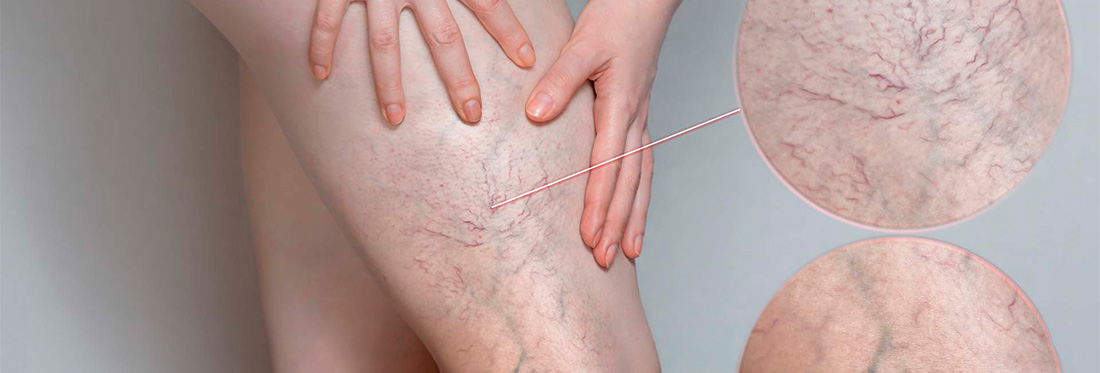
Swelling, heaviness and pain in the legs, cramps, and later slow-healing wounds and even ulcers on the legs — these are the symptoms of varicose vein disease of the lower limbs. Varicose veins are affecting younger and younger people. Today almost half of the patients are 30–35 years old.
Although "varicose veins" is a general term, it has different forms. Some people have capillary (spider) veins, while others have enlarged veins.
Treatment of capillary veins is mostly cosmetic and depends on the person's wishes.
Enlarged veins, on the other hand, can lead to a number of complications if left untreated.
In any case, remember that if varicose veins are left untreated, there is a risk of amputation!
In advanced stages of venous insufficiency, venous ulcers may develop on the legs. If treatment of infected wounds is delayed or not carried out, the process progresses, and as a result the leg may have to be amputated at various levels!
Other complications include vein damage, trophic ulcers, pulmonary embolism and more. These complications are extremely difficult to treat. For this reason, treatment of varicose veins in the legs should not be postponed.
Early diagnosis is essential for getting rid of varicose veins. Don't delay treatment!
Information on this site is general and does not replace an examination by a doctor.